
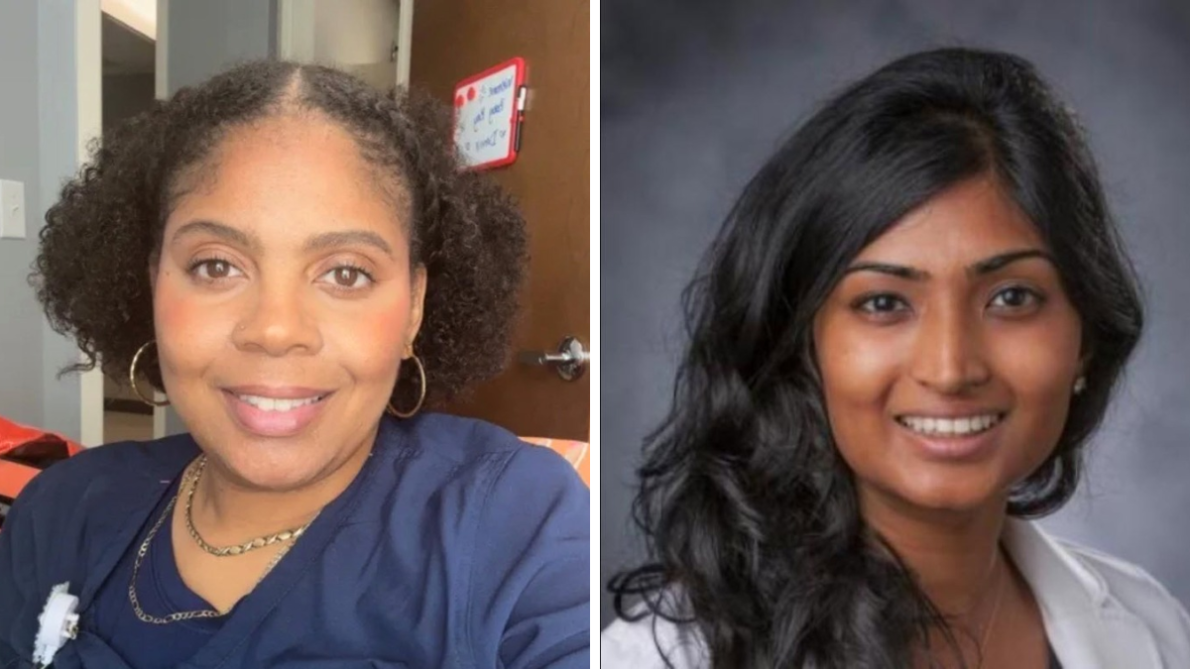
When Lauren Rush, a working mother and caregiver, came to Duke after years of living with hidradenitis suppurativa (HS), the condition had affected nearly every part of her daily life.
“I honestly never had a day without pain,” Lauren said.
Her goal was clear: find an effective treatment, heal well, regain daily function, and return fully to her career and family. But Lauren’s disease was extensive. HS is a chronic inflammatory condition that can create painful, branching tunnels beneath the skin, and her case required a level of surgical care that Dermatology could not provide alone.
Tarannum Jaleel, MD, a Duke Health dermatologist and leading clinical expert in HS, knew Lauren needed both the specialized disease-mapping expertise of dermatology and the surgical capabilities, anatomical expertise, and inpatient resources of an operating-room-based specialty.
She turned to Andrew Berchuck, MD, a gynecologic oncologist who has served on the Duke University School of Medicine’s faculty for 40 years and cares for patients at the Duke Cancer Center and Duke University Hospital. By combining the strengths of their two specialties, Jaleel and Berchuck were able to offer Lauren an approach neither could have provided alone: precisely identify and remove the diseased tissue while preserving as much healthy tissue as possible, with the surgical and inpatient support needed for her recovery.
Uniting expertise in the operating room and across every stage of healing
What began as a referral quickly evolved into a coordinated co-surgery team. Before the procedure, both specialists met with Lauren to map the extent of the sinus tracts, or narrow tunnels that form under the skin with HS. The joint visit provided her with immediate reassurance, both in the trust the physicians placed in each other’s expertise and in the clear plan they outlined for her surgery.
“Having them together made me feel like I had the best of both worlds. It wasn’t one person treating one thing and someone else treating another. They were working together with my best interest at the center of it, and that really helped ease my fears going into surgery.”
— Lauren Rush
During the procedure, Jaleel used specialized probing tools to trace and unroof the complex underground network of tunnels caused by the condition. At the same time, Berchuck provided the surgical foundation, hemostasis, and anatomical guidance across 40-centimeter HS-affected skin encompassing sensitive anatomic locations.
The procedure became a true exercise in collaborative learning. Jaleel gained valuable operative insights into the operations of an inpatient surgical suite, while Berchuck relied on Jaleel’s precise delineation of disease to limit excision to involved tissue, preserving adjacent healthy skin and subcutaneous structures that are critical for function and faster recovery.
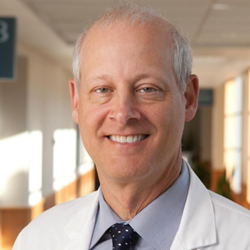
"It’s like being in a subway with multiple different directions the tunnels could be going," Jaleel said. "You don’t want to miss one of the directions, because HS could recur adjacent."
The collaboration extended well beyond the operating room. Since dermatology does not maintain an inpatient service, Berchuck’s team welcomed Lauren onto the gynecologic oncology floor for recovery. There, they continued their division's tradition of comprehensive, end-to-end care and coordinated home health resources.
Critically, the providers made the collaborative, deliberate choice to continue Lauren’s dual immunosuppressive therapy throughout the perioperative window. Rather than pausing treatment over infection concerns, the team closely co-managed her healing. This joint oversight allowed them to distinguish routine inflammatory flares from true surgical complications. Supported by this coordinated care, Lauren recovered smoothly and was discharged after just two days.
Sharing what worked beyond one patient
At her follow-up visit just weeks after surgery, Lauren was free of pain and eager to return to her job. By three months post-op, the surgical site was fully healed. Her quality of life improved so significantly from the procedure that she is now exploring treatment for remaining affected areas.
“Before surgery, the pain was constant, but it was more than pain alone,” she said. “Now it feels like a weight has been lifted. I don’t have to wear dressings every day or constantly worry about whether people can tell what I’m dealing with. I’ve gotten a piece of my confidence back. I even wore jeans for eight hours the other day—something I hadn’t been able to do in about two years. I would do this surgery again in a heartbeat.”
For Lauren, that transformation is also inseparable from feeling heard throughout her care.
“Dr. Jaleel really listens, and that goes such a long way. After dealing with HS for years and feeling like people weren’t always hearing me, having doctors who truly cared, listened, and worked together made all the difference.”
— Lauren Rush
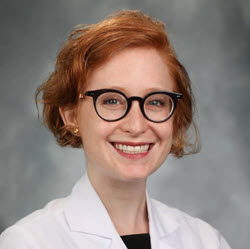
Eager to help others benefit from this multidisciplinary model, Lauren gave enthusiastic consent to share her journey. Alongside co-author Haley Moss, MD, MBA, also a Duke gynecologic oncologist, Jaleel and Berchuck summarized the case and developed a quality-improvement pathway. Their work was accepted as a poster presentation at a national medical conference.
The team’s framework outlines core elements that could include:
- Preoperative joint case review by gynecologic oncology and dermatologic surgery for extent-of-disease assessment.
- Intraoperative dermatologic mapping of sinus tracts and dermal margins before definitive excision
- Postoperative co-management pathway to distinguish expected inflammatory flare from true infection when fever, drainage, erythema, or pain worsen after surgery.
- Recovery planning that incorporates patient goals such as ambulation, sitting tolerance, wound burden, and anticipated return-to-work timing.
The model offers a scalable template for Duke Health and other health systems, and the physicians are currently preparing a proposal to formalize joint surgical criteria across Duke.
"Once the spark is there, it grows into a fire, and a lot of good things happen," Berchuck said.
Beyond a successful procedure, the partnership demonstrates how cross-specialty collaboration can elevate the quality of care a patient receives and, therefore, the patient's quality of life by ensuring access to specialized care. By combining specialized insight with advanced surgical care, Duke clinicians ensured a devoted mother and breadwinner could return to the life, family, and work she loves. Today, she is free of pain, back to her job and life, and paving the way for better care for patients nationwide.
Today, she is living with far less pain, back to work and in her daily life, and regaining pieces of herself that HS had taken away. Her story is also helping shape a model that could improve life for other patients with HS at Duke Health and beyond.
This article was originally published on the Duke Health Integrated Practice intranet and was republished with permission from the author and patient.